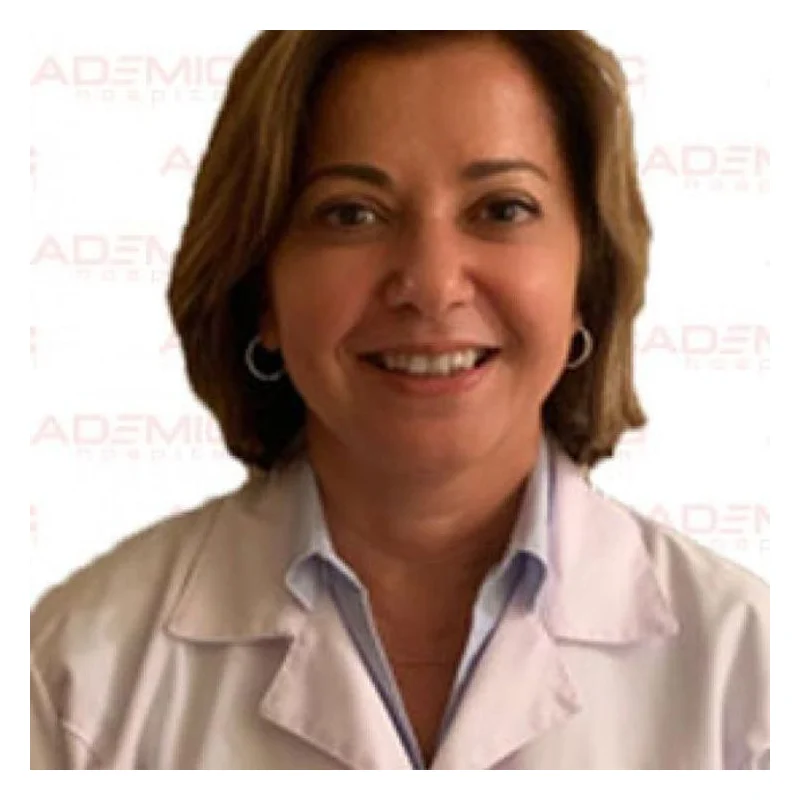
Dr. Miver Erem Tokuş
NeurosurgeryVerified
- 24+years exp.
English · Turkish
FromPrice on request
Free quote
60 seconds · no obligationView Profile
What complex diagnostics of Parkinson's disease involve, how specialist clinical evaluations, 3T MRI, DaTscan imaging and levodopa challenge testing work together, what current diagnostic criteria establish, approximate assessment costs in Turkey compared with the UK, US and Germany, how to prepare for your diagnostic visit, timeline expectations and how to choose an accredited neurological centre.
A written plan with the surgeon's name and the full price — usually within 24 hours.

1 doctor Compare doctors, ratings and prices — ask any of them for a free quote.
NeurosurgeryVerified
English · Turkish
60 seconds · no obligationView Profile
Complex diagnostics of parkinson's disease is an intensive diagnostic pathway designed to confirm or clarify suspected parkinsonism, differentiate idiopathic Parkinson's disease from atypical syndromes, and establish an accurate baseline for treatment. Because no single blood test or simple scan can definitively diagnose Parkinson's, specialist neurological hospitals in Turkey combine clinical staging with molecular neuroimaging, high-resolution MRI, and pharmacological testing. This comprehensive approach is particularly valuable for individuals in early disease stages or those seeking a dependable second opinion.
Parkinson's disease is a neurodegenerative disorder marked by the progressive loss of dopamine-producing cells in the substantia nigra. A thorough evaluation examines both cardinal motor symptoms—such as resting tremor, rigidity, and slowness of movement—and non-motor signs including sleep changes and autonomic shifts. This guide explains how diagnostic protocols work, what the evidence confirms, what packages cost compared with the UK, US and Germany, and how to prepare. For related neurological care, see our guide to neurosurgery treatments in Turkey.
Diagnosis relies on standardised clinical criteria established by the International Parkinson and Movement Disorder Society (MDS). The core requirement is parkinsonism, defined as bradykinesia (slowness of movement) combined with muscular rigidity, resting tremor, or both. Once parkinsonism is confirmed, neurologists look for supportive features and check for red flags that indicate alternative conditions.
A specialist diagnostic workup incorporates five core steps:
Brain imaging cannot replace a hands-on clinical examination, but advanced techniques play an essential role in resolving diagnostic uncertainty and excluding secondary causes. The scientific evidence is clear on what each scan can and cannot prove.
Dopamine transporter imaging, known as DaTscan (123I-ioflupane SPECT), maps presynaptic dopamine transporters in the striatum. Guidelines from the National Institute for Health and Care Excellence (NICE) recommend DaTscan specifically to separate Parkinson's disease from essential tremor, psychogenic tremor, or drug-induced parkinsonism, where dopamine transporter uptake remains normal. However, DaTscan cannot differentiate Parkinson's disease from atypical parkinsonian syndromes such as Multiple System Atrophy (MSA) or Progressive Supranuclear Palsy (PSP), because both also involve dopaminergic loss.
Structural 3 Tesla (3T) MRI detects vascular lesions, normal pressure hydrocephalus, and structural brain changes. Where differential questions involve atypical consciousness shifts or seizures, eeg electroencephalography helps evaluate background cerebral activity.
The complex diagnostics of parkinson's disease cost varies according to the specific neuroimaging modalities required, laboratory panels, and whether assessments are completed as an outpatient or during a short hospital stay. The ranges below represent typical diagnostic packages across international centres.
| Country | Approximate cost range |
|---|---|
| Turkey | €1,200 – €3,800 |
| United Kingdom | €3,000 – €7,500 |
| United States | €4,500 – €12,000 |
| Germany | €2,800 – €7,000 |
Several elements shape the complex diagnostics of parkinson's disease price. Radiopharmaceutical production for DaTscan SPECT accounts for a substantial share of imaging expenses. Adding high-field MRI sequences, autonomic testing, or neuropsychological assessments also affects the total. Turkish diagnostic packages generally combine specialist consultations, scans, blood tests, medical translation, and airport transfers. You can receive a transparent written schedule through our free quote service.
No single test provides the whole answer. A multi-modal assessment combines clinical examination with structural and molecular imaging to address specific diagnostic questions.
| Diagnostic modality | Best suited to | Typical limits |
|---|---|---|
| Clinical examination & MDS-UPDRS | Identifying parkinsonian motor patterns and measuring levodopa response | Difficult in subtle early stages; cannot visualise neuronal loss directly |
| High-field 3T brain MRI | Excluding vascular damage, hydrocephalus, tumours, and atypical brainstem atrophy | Appears normal in uncomplicated early idiopathic Parkinson's disease |
| DaTscan (123I-ioflupane SPECT) | Differentiating Parkinson's disease from essential tremor and drug-induced signs | Cannot distinguish Parkinson's from atypical syndromes such as MSA or PSP |
When diagnostic questions involve sleep disturbances, memory changes, or episodic symptoms, doctors may integrate eeg electroencephalography to record brain electrical activity alongside structural imaging.
A comprehensive diagnostic evaluation is designed for individuals facing diagnostic uncertainty or uncharacteristic symptoms. It is particularly suitable for:
This protocol is not suitable for pregnant women due to the radiopharmaceuticals used in SPECT scanning. Patients with severe claustrophobia or non-compatible metallic implants may require open MRI units or mild oral sedation. The neurology team reviews your medical background beforehand to confirm test suitability.
A complete assessment in Turkey is coordinated across two to three consecutive days to ensure thorough testing without unnecessary fatigue.
The workup starts with a detailed interview with a movement disorder neurologist. You will review your medical history and complete the baseline MDS-UPDRS examination. Blood tests are drawn to check thyroid parameters, metabolic function, and specific markers like ceruloplasmin where early-onset disease is suspected.
You undergo a 3T brain MRI, resting on a scanner table for 30 to 40 minutes while high-resolution sequences are acquired. For the DaTscan, you receive an oral thyroid-blocking agent to prevent radiotracer uptake in the thyroid gland. A small dose of 123I-ioflupane is injected intravenously. After three to four hours of resting to allow tracer binding, you lie in the SPECT scanner for roughly 30 minutes while dopamine transporter images are captured.
If indicated, an acute levodopa challenge test is performed in the morning. Motor scores are measured before and one to two hours after taking levodopa. The neurologist then reviews all scan reports, blood panels, and motor scores with you, explaining the definitive diagnosis and recommended management plan.
Rather than physical before-and-after alterations, a diagnostic evaluation provides an objective, documented baseline. This detailed record gives your hometown physician a reliable foundation for long-term care.
A complete diagnostic package delivers:
Diagnostics cannot predict the precise pace of future symptom progression, as neurodegenerative rates vary widely between individuals. The goal is accurate classification so appropriate therapies can begin without delay.
Because diagnostic testing is non-invasive, complex diagnostics of parkinson's disease recovery does not involve surgical healing or physical downtime. Recovery centres on stabilising your usual medication and eliminating the imaging radiotracer.
If medications were temporarily paused for the levodopa challenge, your neurologist supervises their reintroduction so you return smoothly to your normal schedule. Following the DaTscan, drinking plenty of water during the afternoon helps your kidneys flush out the radiotracer naturally. Patients can walk, dine, and rest comfortably between appointments. You can travel home safely the day after receiving your final reports, carrying your digital imaging files and English medical documentation.
The investigations used in Parkinson's diagnostics are widely endorsed by international authorities, including the NHS, the European Association of Nuclear Medicine, and the US Food and Drug Administration. However, patients should understand the minor risks and transient discomforts involved.
DaTscan SPECT involves a small radiation exposure—approximately 4 to 5 millisieverts—equivalent to roughly two years of natural background radiation. The thyroid-blocking agent effectively safeguards thyroid tissue. Minor injection site tenderness or mild headache can occur occasionally. For MRI scans, the main consideration is claustrophobia, which modern wide-bore machines and supportive technicians manage effectively.
During the levodopa challenge, temporary pauses in medication can cause temporary increases in stiffness or tremor, which resolve once medication is resumed. Some patients experience transient dizziness or mild nausea from the test dose of levodopa, which is why testing takes place under close medical supervision.
When selecting complex diagnostics of parkinson's disease Turkey facilities should be chosen based on clinical capability rather than promotional claims. An accurate evaluation depends on subspecialised medical expertise and advanced diagnostic hardware.
Key standards to confirm include:
Be cautious of red flags such as facilities offering Parkinson's evaluations without a direct neurological examination, clinics promoting unproven stem cell cures, or coordinators pressuring you for immediate deposits. To review our coordination standards, see how it works and contact us through our free quote page to receive a hospital-confirmed diagnostic plan.
Complex diagnostics of Parkinson's disease is an intensive diagnostic evaluation that combines movement disorder neurological examinations, the MDS-UPDRS rating scale, acute levodopa challenge testing, high-resolution 3T brain MRI, and DaTscan molecular imaging. It accurately confirms early Parkinson's disease, differentiates it from other tremors or atypical parkinsonian syndromes, and provides an objective baseline for future therapy.
A DaTscan reliably identifies loss of dopamine transporters in the brain, making it highly effective at separating Parkinson's disease from essential tremor, psychogenic tremor, or drug-induced parkinsonism. However, it cannot differentiate Parkinson's from atypical conditions like Multiple System Atrophy or Progressive Supranuclear Palsy, which also show dopaminergic loss. Clinical neurological correlation remains essential.
In Turkey, a comprehensive diagnostic package typically ranges between €1,200 and €3,800, compared with €3,000 to €7,500 in the UK and €4,500 to €12,000 in the United States. The total fee depends on whether advanced molecular scans such as DaTscan SPECT, specialised MRI sequences, and extended neuropsychological assessments are included.
Unlike cosmetic procedures, diagnostic results provide clinical clarity rather than visual transformations. Your results deliver detailed quantitative imaging scans, standardized motor severity scores (MDS-UPDRS), and documented motor responsiveness to levodopa. This baseline allows your home neurologist to confirm your diagnosis, tailor medication combinations, and accurately track your condition over time.
Because diagnostic assessments are non-surgical, there is no physical recovery period. Patients who temporarily paused medication for the levodopa challenge test resume their normal schedule on the same day. Following radioactive tracer injection for DaTscan imaging, drinking extra fluids ensures the tracer clears naturally within 24 to 48 hours.
The diagnostic procedures cause minimal discomfort. Routine tests involve a simple blood draw and an intravenous cannula insertion for radiotracer administration. MRI and SPECT scans are non-invasive, requiring only that you lie still on a cushioned examination table. Mild transient stiffness may occur if medications are temporarily paused for testing.
The objective findings establish a permanent baseline of your neurological status at the time of testing. Structural MRI scans rarely need repetition unless new acute symptoms emerge. DaTscan results establish whether dopaminergic degeneration is present, providing lasting diagnostic confirmation that guides treatment choices for many years.
Yes. The diagnostic modalities used are well-established and adhere to strict safety guidelines from health authorities like the NHS and FDA. DaTscan involves a low dose of radiation comparable to standard nuclear medicine exams. Thyroid-blocking drops protect thyroid tissue, and MRI scans do not involve any ionizing radiation.
Essential tremor typically causes an action tremor of both hands during movement, without limb stiffness or slowness. Parkinson's disease is characterized by a resting tremor, muscular rigidity, and bradykinesia (slowness of movement). A DaTscan is normal in essential tremor but reveals clear dopaminergic deficit in Parkinson's disease.
Most international patients stay three to four nights in Turkey. This duration allows for the initial neurological consultation, laboratory analyses, 3T MRI, DaTscan SPECT imaging with required tracer uptake intervals, and a final review meeting with the neurologist to receive English reports and disk copies of all scans.
Your request is in!
Your coordinator will contact you — usually within 2 hours, 24/7.
Want a faster, more accurate assessment?
Add photos & medical detailsLeave your number — a coordinator calls you in your language, usually within 15 minutes during office hours.
Thank you!
A coordinator will contact you at the time you chose.

