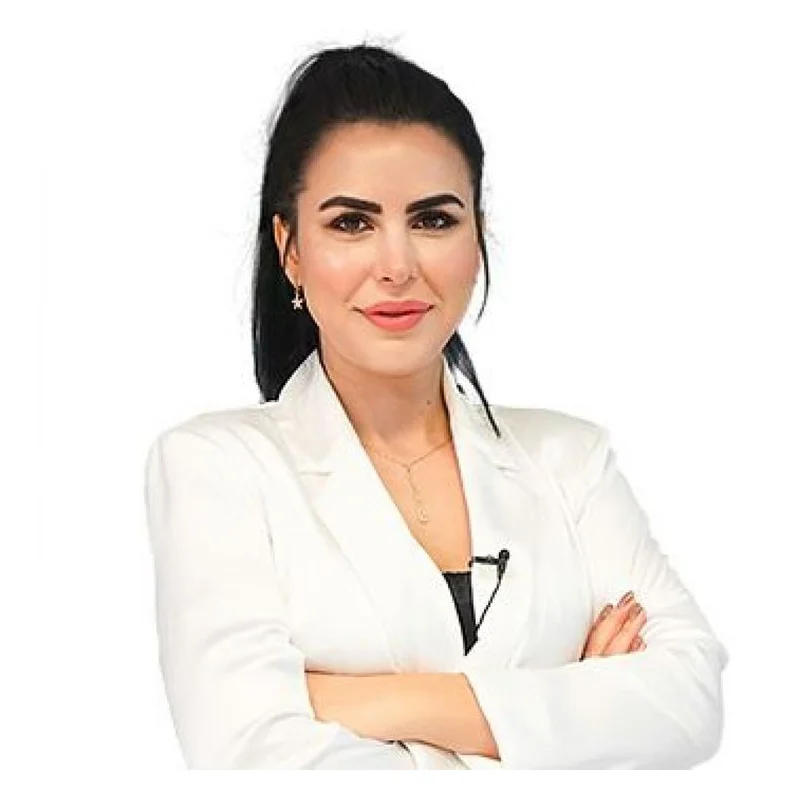
Hacer Erayhan
Hair TransplantVerified
- 19+years exp.
English · Turkish
FromPrice on request
Free quote
60 seconds · no obligationView Profile
An honest guide to an eyelash transplant in Turkey: a rare operation that suits lash loss after injury, burns or hair pulling more than cosmetic lengthening. How scalp hairs are grafted into the eyelid, how many, approximate costs compared with the UK, the US and Germany, recovery, lifelong trimming and curling, risks to the eye and the non-surgical alternatives.
A written plan with the surgeon's name and the full price — usually within 24 hours.

1 doctor Compare doctors, ratings and prices — ask any of them for a free quote.
Hair TransplantVerified
English · Turkish
60 seconds · no obligationView Profile
An eyelash transplant — eyelash transplantation — places single hair follicles, taken from the back of the scalp, along the edge of the eyelid, where they grow as lashes. It is a rare operation: far fewer people have it than an eyebrow or beard transplant, and only some hair transplant teams perform it. It can be done in Turkey at a lower cost than in the UK or the US, but it is worth understanding its limits before you look at prices.
The key point is that the new lashes are scalp hairs. They keep growing, so they must be trimmed regularly for life, and they grow straight rather than curved, so most people curl them. For people who have lost their lashes this is usually an acceptable trade. For people with healthy but short lashes who want longer ones, non-surgical options are usually the better first choice.
This page covers only what is specific to the eyelashes. The general guide to hair transplants, trips and clinic checks is on hair transplant in Turkey, and the extraction method is explained on FUE hair transplant.
An eyelash transplant is usually considered for:
It is usually not suitable when the lashes are falling out because of an active condition — alopecia areata, a thyroid problem, blepharitis or another eyelid disease — because the cause needs treatment first and transplanted hair may be lost as well. After chemotherapy, lashes usually grow back by themselves within months, so a transplant is not the first step. People with dry eye disease or other eye problems should be assessed by an eye doctor first.
An eyelash transplant is priced individually after a doctor has seen photos of your eyelids. As an approximate guide, it usually costs about €1,500–€3,000 in Turkey for both upper eyelids; this is approximate and is confirmed in a written quote. A scalp FUE transplant on our site, for comparison, starts at €1,650.
| Country | Approximate eyelash transplant cost (both upper lids) | Notes |
|---|---|---|
| Turkey | about €1,500–€3,000 | Consultation, local anaesthesia, the operation, aftercare, transfers; hotel often included |
| United Kingdom | about £3,000–£6,000 | Offered by few clinics |
| United States | about $3,000–$8,000 | Often priced per eyelid |
| Germany | about €2,500–€5,000 | Offered by few clinics |
All figures except the live FUE price are approximate private-clinic ranges and vary widely, partly because few clinics offer the operation. The price rises with the number of grafts, if lower lids are included, and if the eyelashes are combined with an eyebrow transplant in the same trip.
The operation is done under local anaesthesia and usually takes two to four hours. The doctor takes single-hair grafts from the back of the scalp, choosing fine hairs, and trims them. Each graft is then threaded into the eyelid margin with a fine needle, or placed into tiny openings, at an angle that points the hair outwards and away from the eye. Usually about 30–80 hairs are placed per eyelid, depending on how many lashes are missing; mostly the upper lids are treated, because lower lashes are short and transplanted hair there is harder to manage.
The angle is the critical part. A hair that grows towards the eye can rub on the surface of the eye, so the doctor needs experience with the eyelid specifically, not only with scalp transplants. Ask how many eyelash transplants the team performs and to see their results.
Most eyelash transplants treat the upper lids only. Upper lashes are the ones that frame the eye and are visible from a distance, and the upper lid gives a little more room to set the angle. Lower lashes are short and fine; transplanted hair there tends to look heavy and needs even more frequent trimming, so the lower lids are treated only in selected cases, usually after injuries or burns.
The donor hairs are chosen one by one from the back of the scalp or behind the ears, where hair is finer. A few dozen to a hundred and fifty grafts leave no visible change in the donor area once the short hair there has grown back. The colour of scalp hair usually matches the lashes well enough, and many people tint or use mascara on the new lashes later anyway.
If you have had or are planning eyelid surgery, the order matters. An upper eyelid surgery changes the lid skin and margin, so it is normally done first, with the lash transplant planned after the lid has healed fully, usually several months later. Tell the doctor about any earlier eyelid operation, tattooed eyeliner or permanent make-up, because scarring along the lid margin can reduce growth.
Plan two to three days in Istanbul: arrival; the consultation, a short eye check and the operation the next day; and a check-up before you fly. Some clinics prefer you to stay one more day so they can see the eyelids once the first swelling has settled. Bring sunglasses for the journey home. The general trip plan and documents are explained in how it works.
Is an eyelash transplant permanent? Usually yes — the follicles come from the back of the scalp and normally keep growing. That is exactly why they need care. Transplanted lashes grow like scalp hair, so most people trim them every two to four weeks. They grow straight, so most people curl them with a lash curler, or have a lash lift or perm. A few hairs may grow in the wrong direction and need to be removed. Some patients also need a small second session for density.
When you look at before and after photos, ask for results at least six to twelve months after the operation, with the lashes untrimmed and trimmed, and in close-up. A natural result is a soft row of lashes, not a dense straight fringe.
Possible problems include swelling and bruising, infection, small cysts at the lid margin, poor growth, and lashes growing towards the eye. Misdirected hairs can irritate the eye and, if left, scratch the cornea, so they should be removed. Damage to the eyelid margin is rare in experienced hands. The International Society of Hair Restoration Surgery (ISHRS) advises that a licensed doctor should perform the surgical steps of any hair transplant; for an eyelid this matters even more. If you develop pain, redness of the eye or blurred vision after the operation, see an eye doctor promptly. How to check a clinic is in how to choose a safe surgeon in Turkey.
Questions to ask before you book:
| Eyelash transplant | Bimatoprost serum (Latisse) | Lash extensions | |
|---|---|---|---|
| What it is | Scalp hairs grafted into the eyelid | Prescription solution applied to the lash line | Synthetic lashes glued to your own lashes |
| Needs own lashes | No | Yes, lashes must still grow | Yes |
| How long it lasts | Usually permanent | Only while used; lashes return to before within months after stopping | A few weeks; refills needed |
| Upkeep | Trimming and curling for life | Daily application | Refills every few weeks |
| Main drawbacks | Surgery, rare eye irritation from misdirected hairs | Possible eye redness, itching, darkening of the lid skin | Can damage natural lashes |
Bimatoprost 0.03% (sold as Latisse) is approved by the US Food and Drug Administration for sparse eyelashes and needs a prescription. For people who still have lashes, it, extensions or false lashes are usually tried before surgery. For people with no lash follicles left, a transplant is one of the few options that grows real hair. Related pages: eyebrow transplant, beard, eyebrow and eyelash treatments and hair transplant hospitals.
Approximately €1,500–€3,000 for both upper eyelids, depending on the number of grafts. This is approximate and is confirmed in a written quote after a doctor has seen photos of your eyelids.
Usually yes, because the hairs come from the back of the scalp. But they keep growing like scalp hair, so they need trimming every few weeks and usually curling, for life.
Yes. Most people trim them every two to four weeks and curl them with a lash curler or a lash lift, because scalp hair grows longer and straighter than natural lashes.
People who have lost lashes through burns, injury, surgery or long-controlled hair pulling, or who were born with very few lashes. People with active alopecia areata, eyelid disease or eye problems should be treated or assessed by an eye doctor first.
Usually about 30–80 per eyelid, depending on how many lashes are missing. Mostly the upper lids are treated.
Swelling, bruising, infection, small cysts, poor growth and lashes growing towards the eye, which can irritate the eye and must be removed. See an eye doctor promptly if you have pain, a red eye or blurred vision.
Swelling and crusts for about a week, no eye make-up or contact lenses for about two weeks, shedding in the first weeks, new growth from about two months and the final result at six to twelve months.
Not for people who still have lashes: Latisse (bimatoprost) and extensions are non-surgical and usually tried first. A transplant is mainly for people whose lash follicles are gone.
Plan two to three days in Istanbul: arrival, the consultation and operation, and a check-up before you fly home.
Yes, both can be done in one session if the donor area allows it; the operation then takes longer. Ask for a quote that lists the grafts for each area.
Your request is in!
Your coordinator will contact you — usually within 2 hours, 24/7.
Want a faster, more accurate assessment?
Add photos & medical detailsLeave your number — a coordinator calls you in your language, usually within 15 minutes during office hours.
Thank you!
A coordinator will contact you at the time you chose.

