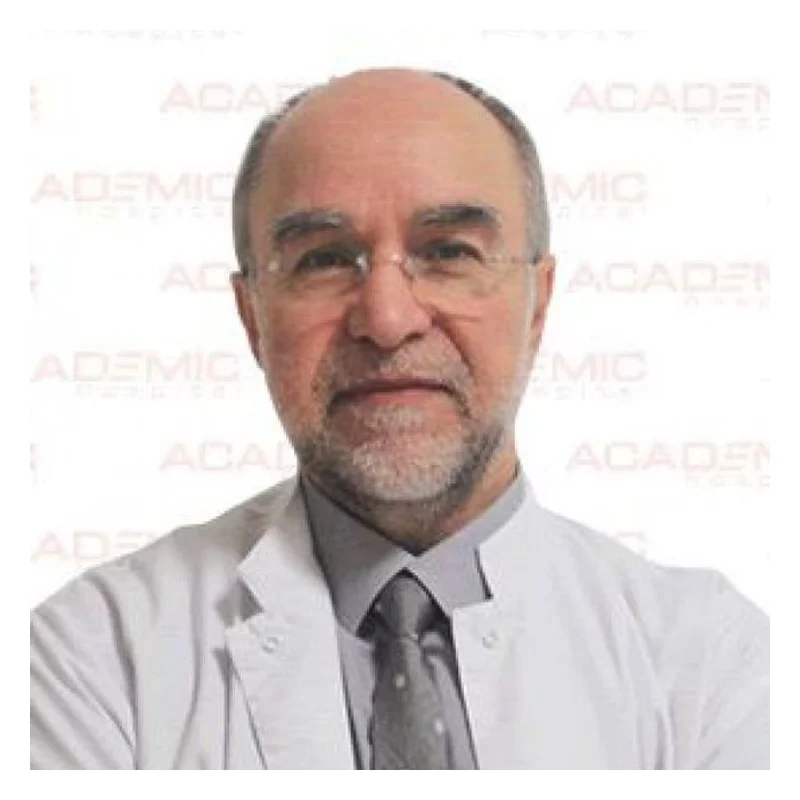
Uzm. Dr. Ertan Özen
GynaecologyVerified
- 36+years exp.
English · Turkish
FromPrice on request
Free quote
60 seconds · no obligationView Profile
What a cervical conization or cone biopsy is, when abnormal cervical cells or a screening result make it necessary, how LEEP, laser and cold knife techniques differ, what recovery and follow-up involve, the effect on future pregnancies, approximate costs in Turkey against the UK, US and Germany, risks and how to check a gynaecology team.
A written plan with the surgeon's name and the full price — usually within 24 hours.

2 doctors Compare doctors, ratings and prices — ask any of them for a free quote.
GynaecologyVerified
English · Turkish
60 seconds · no obligationView Profile
GynaecologyVerified
English · Turkish
60 seconds · no obligationView Profile
Cervical conization cone biopsy is a procedure in which a cone-shaped piece of tissue is removed from the cervix, the neck of the womb. The cone includes the area where abnormal cells were seen and a short stretch of the canal above it, so the pathologist can check whether the abnormal cells have been removed completely and whether anything more serious is present. For many women it is both the diagnosis and the treatment. Gynaecologists in Turkey perform conization in private hospitals using a heated wire loop (LEEP, also called LLETZ), a laser or a surgical scalpel (cold knife), depending on the problem.
A cone biopsy is not the same as a punch biopsy taken at colposcopy, and it is not a hysterectomy: the womb and ovaries stay in place. This guide covers when conization is recommended, how the techniques differ, what recovery and follow-up involve, what it means for pregnancy, what it costs compared with the UK, US and Germany and how to check a hospital. For the wider range see our gynaecology treatments in Turkey.
The usual reason is a high-grade abnormality on the cervix, called cervical intraepithelial neoplasia (CIN) grade 2 or 3, found through a screening test and colposcopy. These are not cancer but can develop into cancer over years if left, and removing them lowers that risk. A cone biopsy is also used when abnormal glandular cells (adenocarcinoma in situ) are found, when colposcopy cannot see the whole abnormal area, when a biopsy suggests early microinvasive disease that needs to be staged, or when a screening result does not match what the colposcopy biopsy shows. Low-grade changes (CIN 1) are usually watched rather than cut.
The decision rests on the colposcopy and pathology reports, so bring them with you. A hospital that offers conization without seeing your reports or without a colposcopy is not following normal practice.
Yes. Excision of the abnormal area is the standard treatment for high-grade cervical changes in the UK, Europe and the US, and the large majority of women are cured by one procedure. The NHS cervical screening programme describes the aim as removing the affected tissue and checking its edges. Success depends on the margins: if the abnormal cells reach the edge of the cone, the chance of residual disease is higher and closer follow-up or a repeat treatment is advised. Treatment does not remove the HPV infection itself in every case, which is why a follow-up test, usually an HPV test of cure at around six months, is part of the care and not an optional extra. Trials have not shown a clear difference in cure rates between LEEP and cold knife, so the choice rests on the findings.
These are approximate ranges for the procedure, anaesthesia and pathology, not hospital quotes. Prices depend on the technique, the type of anaesthesia, whether a day-case or overnight stay is needed and whether colposcopy and pathology are included. Each hospital confirms its price in a written quote.
| Country | Approximate cost range |
|---|---|
| Turkey | €700 – €2,500 |
| United Kingdom | €1,500 – €4,500 |
| United States | €2,500 – €8,000 |
| Germany | €1,200 – €4,000 |
What changes the price: LEEP under local anaesthetic is the least costly; a cold knife or laser cone in an operating theatre under general anaesthesia costs more; and a separate fee is usual for pathology, which should always be included because the report decides your follow-up. A package normally includes the consultation, pre-operative tests, the procedure and anaesthetist, the pathology and a follow-up visit; ask for the list in writing. Women with an NHS or insured pathway for the same procedure should weigh the saving against the need for follow-up at home.
All three remove a cone of tissue; they differ in the instrument. LEEP (loop electrosurgical excision procedure, also called LLETZ in the UK) uses a thin electrified wire loop and is the most widely used, usually under local anaesthetic. Laser conization uses a focused beam and gives a precise cut, mostly under general anaesthetic. Cold knife conization uses a scalpel with no heat and is chosen when a larger or deeper cone is needed or when heat could blur the tissue edges, for example for suspected glandular disease.
| Technique | Best suited to | Typical limits |
|---|---|---|
| LEEP / LLETZ | Most CIN 2/3 lesions on the outer cervix | Heat can affect the tissue edges; depth is limited |
| Laser cone | Precise shapes, selected lesions | Needs equipment and theatre; usually general anaesthetic |
| Cold knife cone | Glandular disease, deeper cones, unclear findings | General anaesthetic; higher bleeding risk |
Simpler treatments such as cervical cryotherapy and cervical cautery do not provide a tissue sample and are used for different problems; our guide to colposcopy explains the examination that precedes the decision.
Women with high-grade CIN, glandular abnormalities or an inconclusive colposcopy are the usual candidates. Pregnancy is a reason to wait, as is an active infection of the cervix or vagina. A cone biopsy is not appropriate for low-grade changes that can be monitored, or for known invasive cancer, where the treatment plan is different and needs an oncology team. If you plan a pregnancy, say so: surgeons try to take the smallest cone that is safe, but the right size depends on the lesion, not on your plans. Women who are close to the menopause, or who have completed their family, may be offered a larger cone to reduce the chance of leaving disease behind.
You lie as for a smear test with your legs supported. The doctor places a speculum, applies iodine or acetic acid to show the abnormal area and, for LEEP, injects local anaesthetic into the cervix. The loop passes through the tissue in a few seconds and the bleeding point is sealed with cautery or a paste. For a laser or cold knife cone you will normally have a general anaesthetic and a short operating theatre stay. Total time on the table is about 10 to 30 minutes. The tissue goes to pathology, and the report arrives in around one to two weeks. Many hospitals will not let you leave Turkey until the report is available or at least the bleeding is under control.
With local anaesthetic you will feel pressure, a smell of burning and perhaps a cramp; with general anaesthesia you feel nothing and wake up with cramps similar to period pain. Most women are back at desk work in one to three days. A brown or bloody discharge usually lasts one to four weeks as the scab separates, and a small bleed about a week to ten days after treatment is common. Expect to avoid sex, tampons, swimming and heavy lifting for about four weeks. A trip of three to four nights in Turkey lets the team check you the day after and agree on the follow-up plan; a flight is normally fine once bleeding is light. Because the pathology report may take days, ask whether the doctor will email it and discuss it by video.
Most women who have had a cone biopsy go on to have healthy pregnancies, but excision of the cervix slightly raises the chance of premature birth, and the risk grows with the depth and volume of tissue removed. Professional guidance, including from the Royal College of Obstetricians and Gynaecologists, therefore advises taking no more tissue than needed and to tell your midwife or obstetrician about the treatment in any later pregnancy so that the cervix can be monitored. Very rarely, scarring narrows the canal (cervical stenosis) and can cause painful periods or make it harder to conceive; this can be treated. Fertility itself, the womb and ovaries, is not affected.
Common effects are cramping, discharge and spotting. Bleeding that needs treatment occurs in a small number of women, mostly in the first two weeks; infection, with fever or foul-smelling discharge, is less common. Other risks include cervical stenosis, a weaker cervix in later pregnancy and, with general anaesthesia, the usual anaesthetic risks. The NHS advises contacting your doctor immediately for heavy bleeding that soaks a pad in an hour, severe pain or fever. If the report shows cells at the margin, you may need another treatment. Ask the team what happens if you bleed after you return home and who will see you.
Look for a registered gynaecologist who works with colposcopy, a licensed hospital with an operating theatre and pathology laboratory, and a plan for follow-up in your home country. Red flags are a recommendation to operate without reading your reports, no pathology included, promises that you will never need follow-up and prices with no breakdown. Read how our process works and request a plan through the free quote page. If fibroids or polyps are part of your symptoms, see hysteroscopic myomectomy.
Questions to ask the clinic:
It is a procedure that removes a cone-shaped piece of the cervix containing abnormal cells, so that the tissue can be examined and the abnormal area treated. The womb and ovaries are left in place.
Usually for high-grade cervical changes (CIN 2 or 3), abnormal glandular cells, or when colposcopy cannot see the whole area. Low-grade changes are normally monitored. Your colposcopy and pathology reports decide the plan.
Approximate ranges are €700 to €2,500 in Turkey and about €1,500 to €4,500 in the UK. The price depends on the technique, the anaesthesia and whether pathology is included in the written quote.
LEEP uses a heated wire loop, usually under local anaesthetic, and suits most lesions. A cold knife uses a scalpel under general anaesthetic and is chosen for deeper cones or suspected glandular disease.
Most women return to desk work within one to three days. Discharge and spotting can last up to four weeks, and sex, tampons and swimming are normally avoided for about four weeks.
Under local anaesthetic you feel pressure and cramping, and under general anaesthetic nothing during the procedure. Period-type cramps afterwards are common and usually respond to simple painkillers.
Most women have healthy pregnancies afterwards, but larger cones slightly raise the chance of premature birth. Tell your obstetrician about the treatment so that the cervix can be monitored.
Most bleeding is light, but a heavier bleed can occur around a week to ten days later as the scab separates. Contact the clinic if you soak a pad in an hour or have fever or severe pain.
Yes. Usually an HPV test of cure is done around six months later, and if the margins were not clear the follow-up is closer. The pathology report decides the plan.
Three to four nights is typical, so that the team can check bleeding the day after and share the pathology plan. Ask whether the report will be ready before you fly.
Your request is in!
Your coordinator will contact you — usually within 2 hours, 24/7.
Want a faster, more accurate assessment?
Add photos & medical detailsLeave your number — a coordinator calls you in your language, usually within 15 minutes during office hours.
Thank you!
A coordinator will contact you at the time you chose.