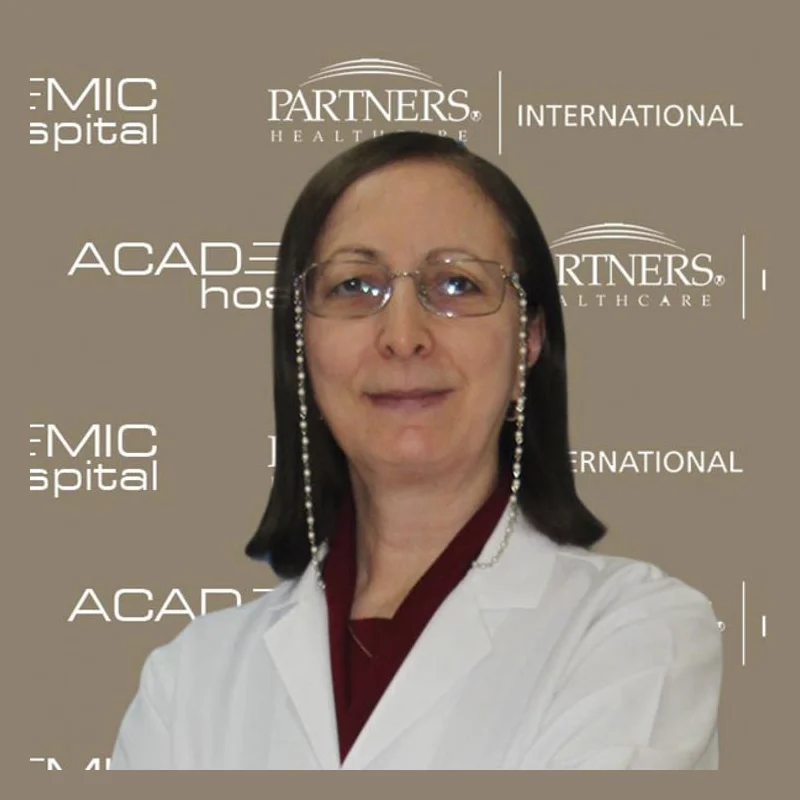
Dr. Aysun Ertaş
Check-ups & DiagnosticsVerified
- 23+years exp.
English · Turkish
FromPrice on request
Free quote
60 seconds · no obligationView Profile
What a CT scan of the whole body is, how multi-slice computed tomography creates cross-sectional images from neck to pelvis, what the clinical evidence says about elective screening, how it compares with whole-body MRI and PET-CT, approximate costs in Turkey against the UK, US and Germany, radiation exposure, preparation and what questions to ask your doctor.
A written plan with the surgeon's name and the full price — usually within 24 hours.

2 doctors Compare doctors, ratings and prices — ask any of them for a free quote.
Check-ups & DiagnosticsVerified
English · Turkish
60 seconds · no obligationView Profile
Check-ups & DiagnosticsVerified
English · Turkish
60 seconds · no obligationView Profile
A ct scan of the whole body is an advanced diagnostic imaging examination that uses computer-processed X-rays to generate detailed cross-sectional images of your internal organs, bones, soft tissue and blood vessels. Known clinically as full-body computed tomography, it scans from the base of the skull down to the pelvis. Private hospitals providing a ct scan of the whole body in Turkey use multi-detector scanners to assess major anatomical structures in a single session.
A full-body CT scan is not a casual checkup and does not replace standard screening. Because it uses ionizing radiation, clinical guidelines require a clear medical justification. This guide examines how the scan works, clinical evidence, approximate costs, radiation safety and clinic checks. For wider preventive options, explore our guide to checkup treatments in Turkey (hub).
The scan takes place inside a doughnut-shaped machine called a gantry. While you lie on a motorized table that moves through the opening, an X-ray tube and digital detectors rotate around you. Different tissues absorb radiation at varying rates according to their density: dense bones appear bright white, air in the lungs appears dark, and soft tissues appear in shades of grey.
Detectors transmit thousands of measurements to a computer, which reconstructs cross-sectional slices as thin as 0.5 millimetres. These slices can be viewed individually or formatted into three-dimensional models. When an intravenous iodinated contrast agent is administered, it circulates through the bloodstream, highlighting organ vascularity and blood vessels to help radiologists spot subtle structural changes.
In diagnostic medicine, whole-body computed tomography is an indispensable tool. It excels at detecting traumatic internal injuries, staging confirmed tumours, identifying arterial aneurysms and investigating complex unexplained symptoms. In these clinical circumstances, its diagnostic accuracy is firmly supported by global medical evidence.
However, when used for elective screening in healthy, asymptomatic individuals, professional radiological societies urge caution. Organisations such as the Royal College of Radiologists (RCR) and the American College of Radiology (ACR) advise against routine whole-body CT screening. Elective scans often detect harmless, benign anomalies known as incidentalomas—such as non-cancerous lung nodules or liver cysts. These findings can trigger anxiety, costly follow-up imaging and invasive biopsies. Trustworthy clinics review your medical history before approving an elective scan.
The figures below outline approximate cost ranges for a comprehensive whole-body CT examination across different countries. These ranges reflect general private healthcare rates rather than specific hospital quotes. Final fees depend on scanner technology, contrast use and reporting tiers.
| Country | Approximate cost range |
|---|---|
| Turkey | €350 – €1,200 |
| United Kingdom | €900 – €2,600 |
| United States | €1,200 – €3,800 |
| Germany | €750 – €2,200 |
Several factors affect the ct scan of the whole body cost. Scans requiring contrast media incur extra medication and monitoring fees. Equipment specifications—such as 64-slice, 128-slice or dual-source scanners—also influence pricing. In addition, subspecialist radiologist reporting or requested second opinions carry higher fees. When evaluating the ct scan of the whole body price, confirm whether kidney tests, contrast and digital DICOM files are included. You can request an itemised plan through our free quote page.
Patients considering comprehensive diagnostic imaging often compare computed tomography with magnetic resonance imaging (MRI) and positron emission tomography (PET-CT). Each modality relies on different physics and serves distinct clinical purposes.
| Modality | Best suited to | Typical limits |
|---|---|---|
| Whole-body CT | Lungs, bone architecture, acute vascular disease, calcifications | Ionizing radiation exposure; lower soft-tissue contrast than MRI |
| Whole-body MRI | Soft tissues, neurological structures, solid organs without radiation | Longer scan time; cannot be used with certain metal implants |
| PET-CT scan | Staging confirmed malignancy, detecting active metabolic disease | Higher radiation dose; specialized radiotracer required; higher cost |
A whole-body CT scan takes only minutes and offers clear detail for lung tissue, coronary calcifications and cortical bone. Whole-body MRI takes 45 to 90 minutes but avoids ionizing radiation entirely, making it suitable for elective wellness imaging of the brain, spine and abdomen. PET-CT is reserved for oncology, using radioactive tracers to detect active cellular metabolism. A supervising physician can help determine which scan suits your clinical profile.
A standard full-body CT protocol typically covers the neck, chest, abdomen and pelvis. In the neck, it assesses the thyroid gland, salivary glands, lymph nodes and cervical blood vessels. Across the chest cavity, high-resolution slices examine the lungs for nodules, emphysema or infections, as well as the mediastinum, airways and thoracic aorta.
Within the abdomen and pelvis, the scan evaluates solid organs including the liver, spleen, pancreas, kidneys and adrenal glands. It can detect gallstones, renal calculi, cysts and aortic aneurysms. However, CT cannot examine the inner mucosal lining of the stomach or colon, which requires endoscopy. Furthermore, while whole-body CT covers chest anatomy, dedicated breast imaging such as mammography remains the international standard for breast tissue evaluation.
A whole-body CT scan provides a detailed photographic cross-section of your anatomy at a single moment. A radiologist examines the images for structural changes, including tissue masses, calcifications, organ enlargement and vascular narrowing. Normal findings indicate that no macroscopic abnormalities or suspicious lesions were detected within the scanner's resolution limits.
It is equally important to understand what the scan cannot reveal. A clear CT scan does not ensure complete absence of illness. It cannot detect microscopic cellular disease, pre-cancerous dysplasia or flat mucosal polyps. Furthermore, CT does not measure biochemical organ function. Because incidental findings like harmless cysts are common, receiving an inconclusive result may require follow-up tests. A reliable scan provides baseline structural data, but it is not a substitute for ongoing medical care.
Suitable candidates for whole-body CT include individuals with unexplained systemic symptoms—such as persistent pain, unintended weight loss or chronic fatigue—requiring diagnostic investigation. Patients with a confirmed cancer diagnosis undergoing staging or treatment surveillance are routine candidates. In addition, individuals with family histories of arterial aneurysms or long-term smokers qualifying for low-dose lung screening can benefit from computed tomography.
Conversely, full-body CT is unsuitable for several groups. Pregnant women must avoid elective CT scans due to fetal radiation risks. Young, healthy adults under 40 without symptoms or genetic risk factors are advised against elective scanning, as cumulative radiation outweighs the likelihood of finding treatable disease. Furthermore, patients with severe renal impairment or contrast allergies may not be eligible for contrast-enhanced scans.
Undergoing a whole-body CT scan abroad is a straightforward outpatient appointment. If intravenous contrast is planned, you fast for four hours, though drinking plain water is encouraged. A recent blood test confirming normal kidney function (serum creatinine) is required and can be performed at the clinic. Before entering the suite, you change into a gown and remove metal items and jewellery.
A cannula is placed in your arm for contrast. During injection, you may feel a warm flush and a metallic taste, both passing quickly. The technician operates the scanner from an adjacent room, providing breath-holding instructions. The scan takes only 5 to 10 minutes.
Regarding ct scan of the whole body recovery, the scan requires no physical downtime. If contrast was given, you remain in the waiting lounge for 15 to 30 minutes to ensure no allergic reaction occurs. You can immediately resume normal activities and diet, drinking extra water to clear the contrast agent. Arranging a ct scan of the whole body Turkey package is straightforward: patients typically stay 1 to 2 days to complete the scan, receive the report and consult the physician. For transport and clinic scheduling, see how it works.
The primary medical considerations associated with computed tomography are ionizing radiation exposure and potential contrast reactions. A full-body CT scan of the chest, abdomen and pelvis typically delivers an effective radiation dose between 10 and 20 millisieverts (mSv), depending on body size and scanner settings. For comparison, natural background radiation averages 2 to 3 mSv annually. NHS and FDA guidelines emphasize keeping radiation doses as low as reasonably achievable using dose-modulation technology.
The theoretical risk of radiation is a small statistical increase in lifetime cancer risk. For patients with clinical indications, the diagnostic benefit far outweighs this risk; however, repeated unnecessary scans should be avoided. Regarding iodinated contrast media, mild reactions like nausea or hives are uncommon. Serious allergic reactions occur in fewer than 1 in 1,000 cases and are treated promptly. Baseline kidney function testing prevents contrast-related renal complications.
When selecting a diagnostic imaging clinic in Turkey, verify that the facility holds international accreditation (JCI or ISO) and is licensed by the Turkish Ministry of Health. Ensure the centre operates modern multi-slice scanners (at least 64-slice) with dose-reduction technology. Crucially, confirm that scans are reported by a board-certified consultant radiologist. Many international visitors coordinate diagnostic scans alongside broader medical checks through checkup treatments in Turkey (hub).
Be cautious of clinics that offer elective full-body CT without reviewing your medical history, make unrealistic promises of complete disease detection, or fail to provide complete digital DICOM files with a formal English report. You can submit your details and receive a transparent plan through our free quote service before booking.
Before confirming your appointment, ask the clinic the following questions:
A CT scan of the whole body is an advanced diagnostic imaging examination that uses computer-linked X-rays to create detailed cross-sectional views of internal organs, bones and blood vessels from the neck to the pelvis. It helps clinicians identify tumours, vascular disease, trauma and structural abnormalities during a single session.
It reliably detects macroscopic tumours, metastases and structural organ anomalies larger than a few millimetres. However, it cannot detect microscopic cancer cells or flat mucosal polyps. Major radiological bodies advise against routine screening in healthy asymptomatic individuals because harmless incidental findings frequently lead to unnecessary follow-up tests and anxiety.
A whole-body CT scan in Turkey typically costs between €350 and €1,200, compared with €900 to €2,600 in the UK. The price varies depending on scanner specifications, whether intravenous contrast is administered, kidney function blood tests and whether subspecialist consultant radiologist reporting is included.
Results provide detailed cross-sectional images of the neck, chest, abdomen and pelvis, interpreted by a consultant radiologist. The formal report details normal anatomy and flags any structural irregularities, calcifications, cysts or suspicious masses, categorising them as benign, indeterminate or requiring further investigation.
There is no physical recovery time after a CT scan. It is a non-invasive outpatient test, allowing you to return to normal daily routines and diet immediately. If intravenous contrast was administered, you will be observed for 15 to 30 minutes and advised to drink water to clear the dye.
The scan causes no physical pain, as X-rays cannot be felt. You lie still on a cushioned motorised couch while the gantry rotates around you. If intravenous contrast is injected, you may experience a brief warm sensation across your body and a temporary metallic taste, both of which fade within two minutes.
The scan itself takes only 5 to 10 minutes inside the machine, with breath-holds lasting 10 to 15 seconds. Preparation, cannula placement and post-scan observation bring the total clinic appointment to approximately 45 to 60 minutes. Digital images are typically available the same day.
Full-body CT involves ionizing radiation, typically between 10 and 20 millisieverts, compared to 2 to 3 millisieverts from annual background radiation. The diagnostic benefit far outweighs the small theoretical radiation risk when medically justified, though routine, unneeded scans should be avoided to prevent cumulative exposure.
Neither is universally suited to every case; each serves distinct needs. CT is faster, lower in cost and superior for evaluating lungs, calcium deposits and bone architecture. Whole-body MRI takes longer and costs more, but avoids ionizing radiation and offers detailed soft-tissue contrast for the brain, spine and abdominal organs.
Most international patients need only 1 to 2 days in Turkey. The imaging examination and kidney function tests are completed on the first day. A second day allows time for the consultant radiologist to finalise the English written report, provide digital DICOM files and conduct a physician consultation.
Your request is in!
Your coordinator will contact you — usually within 2 hours, 24/7.
Want a faster, more accurate assessment?
Add photos & medical detailsLeave your number — a coordinator calls you in your language, usually within 15 minutes during office hours.
Thank you!
A coordinator will contact you at the time you chose.