Hair Transplant Surgeon in Turkey: How to Choose
Choosing the right hair transplant surgeon in Turkey requires looking past marketing claims. Learn who performs each step, how to read reviews, and what questions to ask.
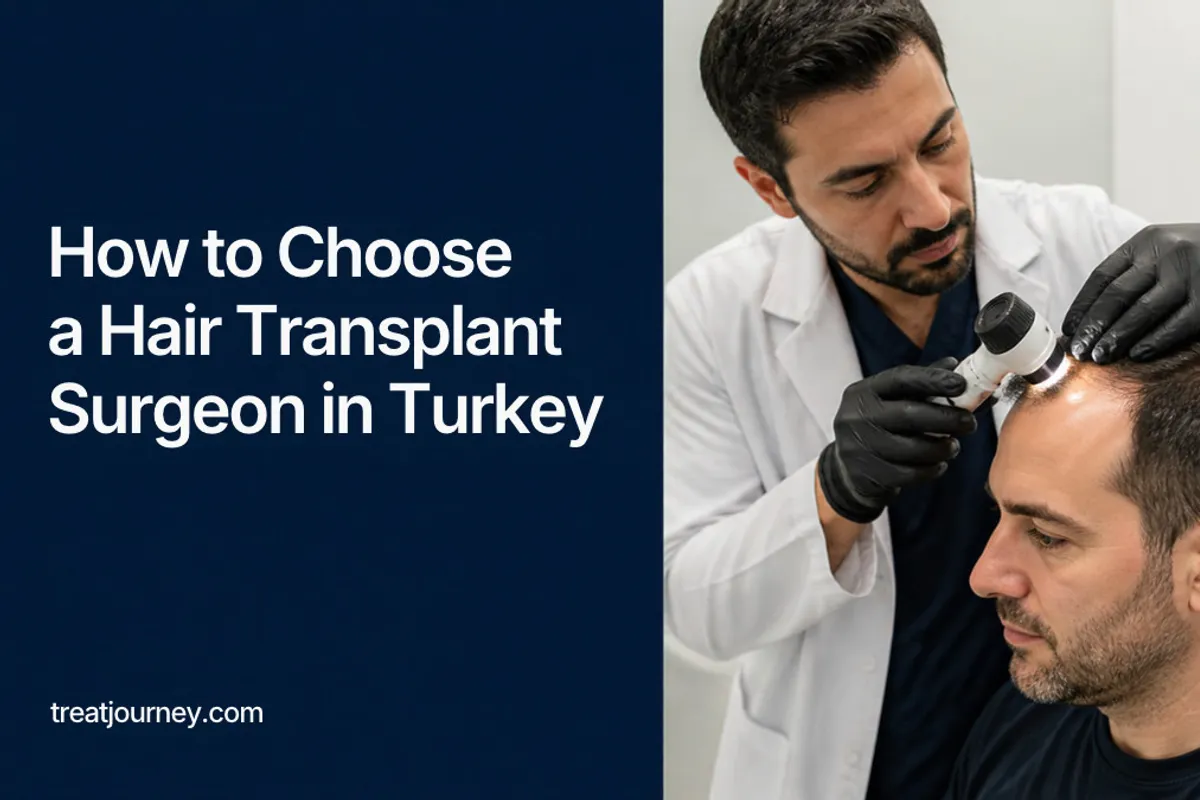
Finding a qualified hair transplant surgeon in Turkey requires looking past commercial marketing packages and examining who actually performs your operation. A successful procedure depends on proper surgical planning, safe donor extraction, and medically sound incision design. While hundreds of clinics operate across Istanbul and other medical hubs, surgical standards vary significantly. You protect your health and your donor follicles by verifying doctor credentials, confirming doctor-led execution of surgical steps, and rejecting high-volume operations run exclusively by unsupervised technicians.
What a hair transplant surgeon in Turkey should actually do
Understanding who performs each step of your operation is the most critical factor when selecting a specialist. Surgical hair restoration consists of distinct stages: pre-operative consultation and hairline design, local anaesthesia administration, donor graft harvesting, recipient site creation, and graft placement. In reputable practices, a licensed physician remains directly responsible for planning and critical surgical manoeuvres.
Surgeon responsibilities versus technician assistance A qualified doctor designs the recipient hairline based on facial proportions, age-appropriate recession, and long-term miniaturisation patterns. The physician should also determine donor harvest boundaries and create the recipient incisions, often referred to as channel opening. Incision angle, direction, and depth dictate the natural appearance and density of your future hair growth.
Technicians serve an auxiliary role under medical supervision. Trained assistants sort extracted follicular units under magnification, maintain hydration in storage solutions, and place grafts into pre-formed incisions. Problems arise when commercial facilities delegate the entire surgical procedure to technicians while a doctor merely stops by for a brief greeting. You must insist on clear, written confirmation detailing exactly which surgical stages the doctor performs.
The rise of technician-led clinics and ISHRS warnings
The global popularity of medical travel has led to the proliferation of high-volume facilities often described as hair factories. In these establishments, multiple operations run simultaneously across several rooms, staffed almost entirely by technicians without physician presence.
The International Society of Hair Restoration Surgery has repeatedly voiced concern regarding this practice. Through its Fight the Fight public education campaign, the organisation warns prospective patients about the health hazards associated with technician-operated clinics. When uncertified staff perform surgical excisions and incisions, the risk of permanent physical complications increases substantially.
Patients subjected to unregulated procedures face severe risks, including overharvested donor zones, transected follicles, necrosis from excessive adrenaline or improper depth, and visible scarring. Irreversible donor depletion leaves patients with patchy bald spots on the back of the head and eliminates graft reserves needed for future corrective procedures. Understanding these risks helps you avoid facilities that prioritise volume over surgical ethics.
Evaluating a hair transplant clinic in Turkey: Licensing and safety
Every legitimate medical facility providing hair restoration must adhere to strict clinical standards established by national healthcare authorities. When evaluating options for a hair transplant clinic in Turkey, your primary check must be registration with the Ministry of Health in Turkey. Regulated facilities operate either as licensed polyclinics, surgical outpatient centres, or accredited hospitals equipped to handle medical emergencies.
You should inquire about clinical protocols, sanitation measures, and emergency response capabilities. A dedicated surgical room must maintain hospital-grade air filtration and sterilisation equipment to prevent post-operative infections. Furthermore, clinics that limit their daily workload to one or two patients per physician demonstrate a commitment to patient safety that commercial volume clinics cannot match.
You can learn more about general travel preparation and clinical checks in our comprehensive hair transplant Turkey guide. Taking time to verify administrative and surgical credentials ensures your procedure takes place in a safe, legitimate healthcare setting.
Comparing surgical techniques: FUE vs DHI
Choosing the appropriate extraction and placement method depends on your degree of hair loss, personal goals, and hair characteristics. During your consultation, your physician should evaluate your scalp and explain the medical rationale for choosing between standard follicular extraction and direct placement.
Modern hair restoration relies on two primary harvesting and placement methodologies:
- FUE hair transplant: Follicular Unit Extraction involves using a micro-motor or manual punch to isolate follicular units from the donor zone. The doctor then creates recipient incisions with steel or sapphire blades before grafts are inserted. FUE is well suited for covering larger balding areas requiring substantial graft numbers.
- DHI hair transplant: Direct Hair Implantation utilises a specialised implanter pen (such as a Choi implanter). Grafts are loaded into the pen, which pierces the skin and deposits the follicle simultaneously. This technique allows dense packing between existing hairs without requiring wide recipient slits.
Specialised variations cater to specific patient circumstances. For patients who cannot shave their head for professional reasons, an unshaven hair transplant offers discreet follicular harvesting. Female patients with diffuse thinning require tailored diagnostic approaches, making a specialised female hair transplant protocol essential to address hormonal and non-hormonal patterns of shedding.
Donor management and answering "how many grafts do I need?"
One common question prospective patients ask during initial research is, how many grafts do I need. The answer requires a careful assessment of donor density, hair calibre, curl, and potential future loss rather than an arbitrary target figure.
Authoritative medical bodies such as the American Academy of Dermatology and the NHS emphasize that male pattern baldness is a progressive condition. Because genetic hair thinning continues throughout your lifetime, your donor supply is strictly finite. An average donor area contains between five thousand and eight thousand harvestable follicular units over a patient's entire life.
Irresponsible clinics frequently offer packages promising five thousand or six thousand grafts in a single marathon session. Harvesting such excessive quantities often results in high transection rates, vascular shock, and a moth-eaten appearance across the occipital scalp. A conscientious surgeon recommends safe extraction limits, typically between two thousand and three thousand five hundred grafts per session, preserving donor reserves for subsequent refinement decades later.
How to evaluate hair transplant Turkey reviews and before-and-after photos
Online patient feedback is a valuable research tool, but you must evaluate testimonials critically. Many prospective patients search online forums for the best hair transplant surgeon, yet promotional content often conceals commercial sales tactics.
When reviewing hair transplant Turkey reviews, focus on accounts that document the entire recovery period. Hair restoration results require twelve to eighteen months to mature fully. Early reviews written within days or weeks of surgery reflect hotel accommodation and staff friendliness rather than surgical efficacy or graft survival. Look for consistent photographic evidence showing hair growth under clear, unedited lighting at three, six, and twelve months post-procedure.
Be cautious of photographic manipulation in promotional portfolios. Clinics sometimes conceal poor density or harsh hairlines by altering camera angles, wetting the hair, using harsh flash to wash out scalp contrast, or applying cosmetic concealing fibres. Reading reports of hair transplant gone wrong cases highlights how aggressive harvesting and poorly positioned hairlines cause distress when marketing promises replace clinical integrity.
Questions to ask: Good answers versus warning signs
Direct communication with the clinic provides immediate insight into their operational ethics. Preparing specific questions helps you separate physician-led clinics from sales agencies.
The following comparison table highlights key questions to ask during your preliminary consultation, along with responses that indicate quality care versus red flags:
| Question to Ask | Reassuring Answer | Warning Sign |
|---|---|---|
| Who performs graft extraction and channel incisions? | The licensed physician performs extraction and channel openings personally, with technicians assisting in placement. | Technicians perform the entire procedure while a doctor only oversees administrative operations. |
| How many surgical patients does the doctor treat each day? | The doctor treats one or at most two patients daily to maintain focus and surgical precision. | The clinic operates five to ten rooms concurrently with rotating technicians. |
| What is the long-term plan for my donor area? | The doctor calculates donor density and reserves follicles for potential future hair thinning stages. | The clinic promises maximum possible grafts in one session without examining lifetime donor limits. |
| How do you manage surgical emergencies? | The clinic operates within a licensed surgical centre or hospital equipped with emergency resuscitation protocols. | The procedure occurs in an ordinary office suite without documented emergency medical facilities. |
| What medical follow-up is provided after surgery? | Structured follow-up consultations at one, three, six, and twelve months with medical staff. | Communication ceases once payment is made and travel back home is completed. |
Evaluating these answers enables you to identify clinics that prioritize patient safety and long-term aesthetic outcomes over commercial sales turnover.
Consultation checklist before booking your procedure
Before finalising travel arrangements or submitting a deposit, complete a systematic verification of your chosen medical team. A methodical approach prevents hasty commitments based solely on aggressive promotional discounts.
Use this practical checklist during your evaluation:
- Confirm physician registration: Verify that your named doctor holds valid medical licensing with relevant professional associations and national health registries.
- Review unedited photographic portfolios: Request high-resolution photographs showing hairlines parted at close range under natural illumination at twelve months post-op.
- Obtain written scope of medical involvement: Secure written documentation specifying that a licensed physician will design the hairline and execute donor incisions.
- Assess realistic graft estimates: Reject quotes proposing extreme graft counts that exceed safe harvesting thresholds for your donor characteristics.
- Clarify emergency and hospital protocols: Ensure the surgical setting has hospital-grade infrastructure and registered clinical staff.
- Verify aftercare and complication policies: Understand who manages post-operative queries, how graft survival issues are addressed, and what aftercare supplies are included.
Taking these precautions ensures that your journey is grounded in realistic expectations and professional medical oversight.
Researching your procedure through Treat Journey
Navigating overseas medical care requires transparent information and independent verification. Treat Journey acts as a dedicated coordination platform, helping international patients compare accredited surgical facilities, evaluate medical credentials, and review verified patient experiences.
If you are considering a hair transplant, you can explore practitioner profiles on our directory of doctors. Each profile details medical background, surgical specialisations, and clinical settings so that you can verify qualifications independently before making contact.
Transparent pricing is an integral part of responsible medical planning. On Treat Journey, you can review live price estimates, including standard FUE packages from €1,190 and specialised DHI options from €1,420. When you are ready to explore your clinical options and receive a customised treatment assessment based on your individual hair loss pattern, you can request a free quote to begin your consultation.
Send your details and a coordinator will prepare a free, written plan with verified doctors.
Hospitals offering FUE Hair Transplant in Turkey
- Medipol Mega University Hospital · IstanbulFrom €1,610
- Smile Hair Clinic · IstanbulFrom €2,190
- Estenove Hair Transplant Clinic · IstanbulFrom €3,070
- Estethica Ataşehir Medical Center · IstanbulFrom €1,650
- Avicenna International Hospital · IstanbulFrom €1,420
- Medicana International Izmir Hospital · IzmirFrom €1,190
Frequently asked questions
Choosing the right surgeon requires verifying their medical licence, specialist training, and active participation during surgery. You should look for practitioners who personally design the hairline, extract grafts, or create recipient incisions rather than delegating the entire procedure to technicians. Reviewing long-term patient results at twelve months and confirming clinic emergency standards will also help you make an informed decision.
Under Turkish medical regulations, only licensed medical doctors are legally permitted to perform surgical incisions, including graft extraction and channel opening. Technicians and nurses may assist with graft sorting, counting, and placement under direct supervision. You should always ask your clinic in writing which steps will be completed by the doctor.
Follicular Unit Extraction involves punching donor follicular units, extracting them, creating incisions in the recipient area, and inserting the hairs. Direct Hair Implantation uses a specialised pen-like implanter tool that creates the recipient site and places the graft simultaneously. Both methods rely on the same donor harvesting process, but DHI allows precise depth and angle control without prior slit creation.
The number of grafts required depends on your degree of hair thinning, hair shaft thickness, scalp laxity, and the surface area of the balding scalp. Most single-session procedures safely transplant between two thousand and four thousand grafts to protect donor density for future needs. A qualified doctor must evaluate your donor area before committing to any specific graft number.
When assessing patient reviews, look for detailed accounts that follow the complete recovery timeline through twelve to eighteen months. Be cautious of reviews posted immediately after surgery, as graft survival and natural hairline appearance cannot be judged during the first few days. Independent platforms with verified photos and consistent descriptions provide more reliable insight than promotional clinic testimonials.
A reputable clinic must be registered with the national health authority and operate within a fully equipped clinical or hospital environment. Look for facilities that limit their daily patient intake to one or two surgeries per doctor to ensure focused surgical care. Transparent communication regarding surgical staff qualifications, emergency protocols, and aftercare support is essential.
Technicians are not legally authorised to perform surgical incisions or operate independently without a supervising physician. The presence of a licensed doctor throughout crucial stages of the procedure protects you from improper donor harvesting, scarring, and unnatural hairline design. If a clinic cannot confirm doctor involvement during extraction and site creation, you should seek care elsewhere.