Gastric Sleeve vs Gastric Balloon: How to Choose
Understand the key differences between a gastric sleeve and an intragastric balloon. Learn how eligibility, surgical permanence, and recovery differ.
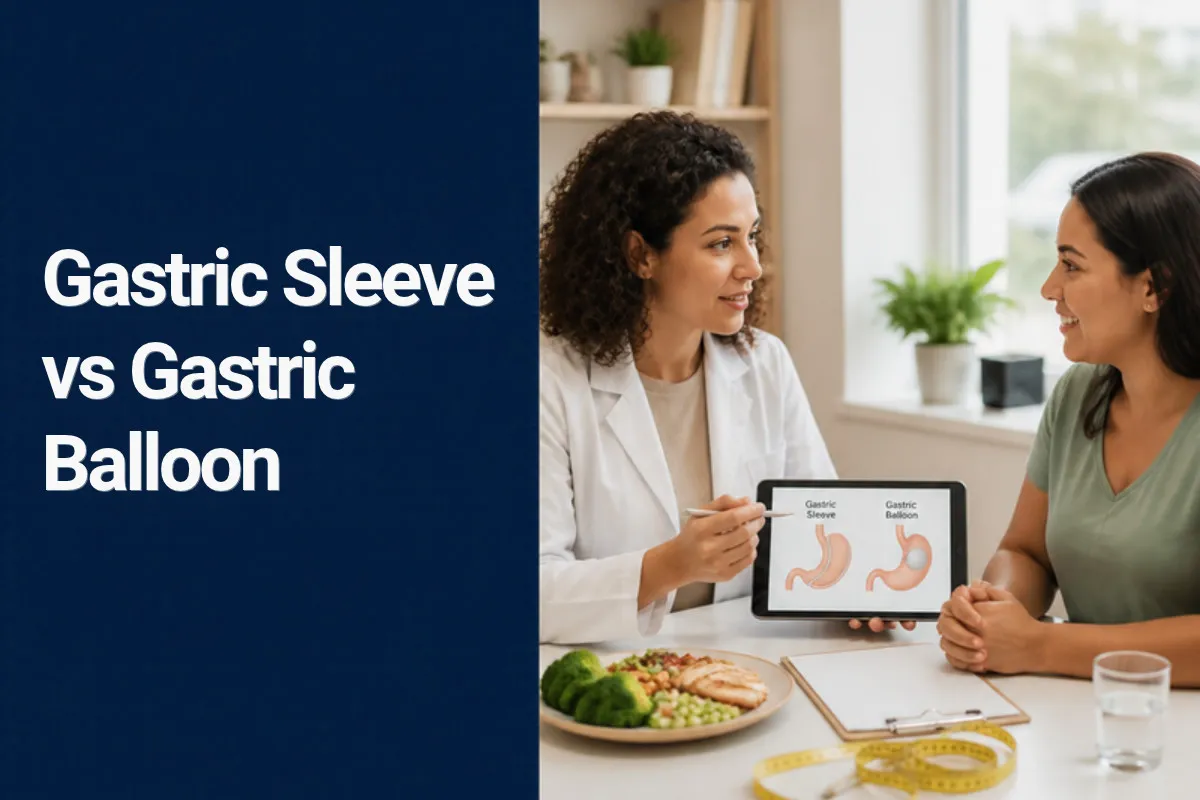
Choosing between a gastric sleeve vs gastric balloon depends on your body mass index, long-term health goals, and readiness for permanent surgery. A sleeve gastrectomy surgically removes a substantial portion of the stomach forever, whereas an intragastric balloon offers a temporary, non-surgical alternative that is removed after six to twelve months. Both approaches restrict food intake, but they involve different medical commitments, recovery profiles, and lifestyle adaptations. Understanding these distinctions helps you determine the right path for your metabolic health.
Understanding gastric sleeve vs gastric balloon
Patients evaluating bariatric surgery often compare surgical and endoscopic options when lifestyle measures alone have not produced lasting health improvements. These two approaches represent fundamentally different medical philosophies.
What is a gastric sleeve?
A gastric sleeve, clinically known as a sleeve gastrectomy, is a surgical procedure performed under general anaesthesia. During this operation, a surgeon uses laparoscopic tools to excise approximately seventy-five to eighty percent of the stomach along its greater curvature. The remaining tissue is shaped into a narrow vertical tube that resembles a banana. This procedure is permanent and irreversible because the excised portion of the stomach is removed from the body entirely. According to clinical guidance from the NHS, surgical interventions such as the sleeve serve as established treatments for severe obesity when non-invasive measures prove insufficient.
What is an intragastric balloon?
In contrast, a gastric balloon is an endoscopic, non-surgical weight management tool. A soft silicone balloon is inserted into the stomach through the mouth using a flexible endoscope while you are under mild sedation. Once positioned in the stomach cavity, the balloon is inflated with sterile saline solution or filled with gas. The device floats freely within the stomach, occupying valuable volume. Intragastric balloons are temporary devices designed to remain in place for approximately six to twelve months, depending on the model selected. Once the designated treatment window ends, the balloon is deflated and removed endoscopically.
How each procedure works and what to expect
Both treatments achieve results by reducing the volume of food you can consume, yet their physiological mechanisms differ significantly.
Mechanism of the sleeve gastrectomy
The gastric sleeve operates through mechanical restriction and hormonal modulation. By drastically reducing stomach volume, the procedure limits the physical quantity of solid food you can hold at any single meal. Furthermore, removing the gastric fundus eliminates the primary production site of ghrelin, often referred to as the hunger hormone. Patients typically experience a marked reduction in appetite during the initial postoperative months. However, adapting to this new digestive anatomy requires strict adherence to progressive nutritional phases. Understanding the dietary stages before and after surgery is critical to avoiding complications such as nausea, vomiting, or staple line irritation.
Mechanism of the temporary balloon
An intragastric balloon functions purely through mechanical occupation and altered gastric motility. By taking up space in the stomach, the balloon triggers stretch receptors that signal fullness to your brain much earlier during a meal. The device also slows the rate at which food empties into the small intestine, prolonging post-meal satiety. Unlike surgical interventions, a balloon does not alter your digestive anatomy or permanently change metabolic hormone production. The American Society for Metabolic and Bariatric Surgery (ASMBS) notes that while endoscopic devices provide meaningful short-term weight management, their success relies heavily on adopting permanent behavioural modifications during the placement window.
Who is eligible: BMI ranges and health factors
Determining whether you qualify for an endoscopic device or major surgery involves careful evaluation of your medical history, metabolic profile, and current body mass index.
Candidacy for a gastric balloon Turkey
A gastric balloon Turkey procedure is frequently recommended for individuals with mild to moderate obesity who do not meet international criteria for bariatric surgery. In general clinical practice, suitable candidates possess a body mass index between twenty-seven and thirty-five. It is also considered for individuals with higher body mass index values who refuse surgical intervention or who require temporary reduction to lower anaesthetic risks prior to elective operations. Candidates must have no history of prior gastric surgery, severe oesophagitis, or large hiatus hernias. Because the balloon is removed after six to twelve months, candidates must demonstrate willingness to commit to intensive nutritional coaching.
Candidacy for a gastric sleeve Turkey
Undergoing a gastric sleeve Turkey procedure requires meeting criteria established by health authorities. Guidelines from the National Institute for Health and Care Excellence (NICE) indicate that bariatric surgery is typically appropriate for adults with a body mass index of forty or above, or thirty-five to forty with obesity-related conditions such as type 2 diabetes or hypertension. In some cases, surgeons may also discuss a gastric bypass. Reading a comparison between a gastric sleeve and gastric bypass helps you explore how surgical routes address metabolic dysfunction.
Side effects, potential risks, and complications
Every medical intervention carries potential drawbacks and risks that require honest evaluation.
Intragastric balloon side effects and early removal
The most frequent side effects of an intragastric balloon occur during the first three to seven days after placement. As the stomach attempts to digest or expel the foreign object, patients commonly experience nausea, abdominal cramping, acid reflux, and persistent vomiting. Antispasmodic and antiemetic medications help manage these symptoms until accommodation occurs. However, clinical studies show that a modest percentage of patients cannot tolerate the physical presence of the balloon, leading to early endoscopic removal before the treatment period concludes. Rare risks include balloon deflation, spontaneous hyperinflation, gastric ulceration, and intestinal obstruction if a deflated balloon migrates down the digestive tract.
Gastric sleeve complications and permanent changes
Because a sleeve gastrectomy involves cutting and stapling stomach tissue, the surgical risks are more substantial. Early complications include bleeding, infection, adverse reactions to general anaesthesia, and staple line leakage, which requires urgent medical management. Over the longer term, patients may develop gastro-oesophageal reflux disease or mechanical strictures along the gastric tube. Furthermore, reducing stomach volume and intrinsic factor secretion diminishes the absorption of essential micronutrients. Guidance published by the National Institute of Diabetes and Digestive and Kidney Diseases (NIDDK) highlights that patients undergoing sleeve gastrectomy must commit to lifelong daily supplementation of multivitamins, vitamin B12, iron, and calcium, accompanied by periodic blood monitoring.
Recovery timeline and planning your stay in Turkey
Planning medical travel requires an accurate understanding of clinical timelines, hospital stays, and recuperation periods abroad.
Staying in Turkey for your treatment
The duration of your stay in Turkey depends on the invasiveness of the chosen procedure. An intragastric balloon insertion is usually an outpatient procedure or involves an overnight hospital stay to monitor cramping and nausea. Patients traveling for a balloon typically remain in Turkey for three to four days. This schedule allows your medical team to verify that you tolerate fluids before discharge. For a laparoscopic sleeve gastrectomy, patients generally stay in the hospital for two to three nights. Surgeons usually require a total stay in Turkey of five to seven days for pre-operative tests, leak evaluations, and recovery checks.
Traveling home and flying advice
Returning home after either procedure requires thoughtful preparation. Following laparoscopic surgery, prolonged immobility during flights increases the risk of deep vein thrombosis. Patients must wear graduated compression stockings, stay well hydrated with clear liquids, and walk along the aircraft cabin aisle at regular intervals. Reviewing medical guidelines on flying after surgery provides practical advice for managing luggage, taking prescribed anti-nausea medication, and scheduling post-travel follow-ups with your local general practitioner.
Long-term commitment and weight regain risks
Achieving lasting metabolic success depends on behavioural commitment rather than the procedure alone. Neither treatment functions as an effortless cure for chronic weight struggles.
With an intragastric balloon, the device acts as a temporary training aid. It forces you to eat smaller portions and chew thoroughly. However, once the balloon is removed, the physical restriction disappears completely. If you have not established disciplined eating patterns, regular physical activity, and emotional coping mechanisms, weight regain is common. Patients often wonder is gastric balloon worth it when weighing the cost against the temporary nature of the device. The answer hinges on whether you view the placement window as an intensive lifestyle reset supported by professional nutritional guidance.
With a gastric sleeve, the structural changes remain permanent, offering durable restriction over many years. Nevertheless, the stomach tissue can gradually adapt and stretch over time if you regularly overconsume food or drink calorie-dense liquids. Long-term success requires lifelong dedication to mindful eating, adequate protein intake, consistent exercise, and regular clinical monitoring.
Comparing your options: sleeve vs balloon
Evaluating both procedures side by side clarifies how each intervention aligns with your physical health, financial readiness, and comfort with surgery.
| Comparison Factor | Laparoscopic Gastric Sleeve | Intragastric Balloon |
|---|---|---|
| Invasiveness | Major laparoscopic surgery | Non-surgical endoscopic procedure |
| Permanence | Permanent and irreversible | Temporary (removed after 6 to 12 months) |
| Anaesthesia type | General anaesthesia | Conscious sedation or mild anaesthesia |
| Typical BMI indication | BMI 35 to 40+ with medical conditions | BMI 27 to 35 (or bridge intervention) |
| Procedure duration | 60 to 90 minutes | 15 to 30 minutes |
| Recommended stay in Turkey | 5 to 7 days | 3 to 4 days |
| Anatomical modification | 75% to 80% of stomach excised | None; temporary space-occupying device |
| Micronutrient supplements | Lifelong daily supplementation required | Temporary during placement if needed |
| Primary initial side effects | Surgical pain, fatigue, reflux | Nausea, vomiting, severe abdominal cramps |
| Starting cost indicator | From €2,060 | From €1,100 |
When deciding between these treatments, consider working through this practical evaluation checklist:
- Evaluate whether your medical history and body mass index meet standard surgical guidelines.
- Determine whether you are comfortable with permanent anatomical alteration or prefer a reversible option.
- Assess your ability to commit to lifelong daily vitamin and mineral supplementation.
- Consider whether you can maintain strict portion control once a temporary device is removed.
- Discuss your options thoroughly with an independent medical doctor before traveling abroad.
Procedure costs and finding a provider
Financial considerations often play an important role when planning medical travel. In Turkey, pricing transparency helps international patients evaluate their options responsibly.
For patients considering surgical intervention, pricing for a gastric sleeve Turkey package begins from €2,060. For those pursuing a non-surgical path, pricing for a gastric balloon Turkey procedure begins from €1,100. Exact quotes vary between medical facilities based on health evaluations, required pre-operative tests, and the specific balloon model or surgical instruments utilized. Hospital quotes specify the precise clinical services included in your written treatment plan.
When choosing a facility for weight loss surgery Turkey providers offer, focus on clinical quality rather than marketing promises. Verify that the hospital holds national or international accreditations such as Joint Commission International status. Review the primary surgeon's formal credentials, bariatric specialization, and case volume. Confirm that the medical facility maintains comprehensive intensive care facilities, an experienced anaesthesiology department, and an established post-discharge bariatric support team to guide your long-term recuperation.
Next steps on Treat Journey
Choosing the right metabolic treatment requires clear medical information and transparent hospital comparisons. Treat Journey serves as an independent coordination service that helps international patients research accredited hospitals and qualified bariatric doctors in Turkey.
Through the platform, you can inspect detailed hospital profiles, evaluate surgeon qualifications, examine verified patient feedback, and review pricing indicators without commercial pressure. Once you gather your relevant medical history, you can request a free quote through Treat Journey to receive clear, personalized estimates directly from licensed medical facilities. Take your time to review every written quotation, consult your local healthcare provider, and choose the clinical pathway that aligns safely with your long-term wellness.
Send your details and a coordinator will prepare a free, written plan with verified doctors.
Hospitals offering Gastric Sleeve in Turkey
- Lokman Hekim Istanbul Hospital · IstanbulFrom €2,280
- Medipol Mega University Hospital · IstanbulFrom €7,800
- Memorial Şişli Hospital · IstanbulFrom €2,550
- Memorial Bahçelievler Hospital · IstanbulFrom €2,750
- Hisar Hospital Intercontinental · IstanbulFrom €2,260
- Memorial Antalya Hospital · AntalyaFrom €2,370
Frequently asked questions
The primary difference is permanence and invasiveness. A gastric sleeve is a permanent surgical procedure that removes roughly 75 to 80 percent of the stomach under general anaesthesia. In contrast, an intragastric balloon is a temporary, non-surgical device placed endoscopically for six to twelve months to assist with portion control.
Patients traveling for an intragastric balloon typically spend two to three days in Turkey. The insertion itself takes about fifteen to thirty minutes under mild sedation, often as an outpatient or overnight observation case. This brief schedule allows medical teams to monitor your initial tolerance before you fly home.
Most patients remain in the hospital for two to three nights following laparoscopic sleeve surgery. Doctors advise staying in Turkey for roughly five to seven days total so pre-operative tests and post-operative checks can be safely completed. Full return to normal desk work generally takes two to three weeks once back home.
An intragastric balloon can be an effective stepping stone for individuals who need moderate reduction or who do not qualify for surgery. It trains you to consume smaller meals while the device occupies gastric volume. However, lasting results depend entirely on whether you maintain healthy dietary habits after the balloon is removed.
A sleeve gastrectomy cannot be reversed because a major portion of the stomach is permanently excised. If severe complications or reflux develop, surgeons may convert the sleeve to another configuration such as a bypass. This permanent nature makes extensive pre-operative evaluation essential before deciding on surgery.
Candidacy for bariatric operations generally requires a body mass index of 40 or higher, or a body mass index of 35 or higher alongside obesity-related conditions such as type 2 diabetes or hypertension. Patients with lower body mass indexes who do not meet these surgical thresholds are often considered for temporary endoscopic alternatives like balloons. Every patient must undergo blood work, cardiac evaluations, and medical assessments before approval.
Persistent nausea, cramping, and vomiting can occur during the first few days as your stomach adjusts to the foreign body. While medications usually alleviate these symptoms, a small percentage of patients experience severe intolerance that does not resolve. In such instances, the balloon can be safely deflated and removed early via an endoscopic procedure.

